
Pain that starts in the lower back and shoots down the leg can feel scary and confusing. Many people face this problem and struggle to sit, walk, or sleep properly. Sciatica Treatment in Raipur helps reduce this pain by finding the exact nerve problem and treating it step by step in a safe way. This type of pain may also cause tingling, numbness, or weakness in one leg. Early care is important so the problem does not become worse over time.
In this blog, we will explain what sciatica is, why it happens, what symptoms you should not ignore, and how treatment works. You will also learn simple precautions and daily habits that support faster recovery. If you want the right guidance, Dr. Harshit Goenka provides step-by-step spine care at Goenka Spine and Skin Centre in Raipur to support safe and long-lasting recovery.. With proper evaluation and the right treatment plan, many patients return to daily life with better comfort and movement.
What Is Sciatica?
Sciatica is not a disease. It is a type of pain that happens due to a problem in the spine or nearby nerves. This pain usually starts when a nerve in the lower back gets pressed, irritated, or inflamed because of spine changes or injury.
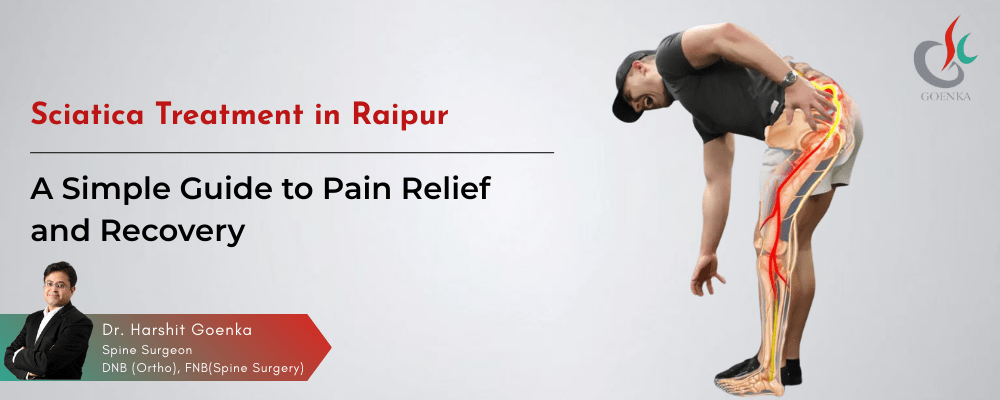
The nerve involved is called the sciatic nerve, it’s the thickest and longest nerve in the body. It begins in the lower back and travels through the hips, buttocks, legs, and down to the feet. Because the nerve covers such a long area, the pain can spread widely and feel uncomfortable.
When this nerve gets disturbed, you may feel:
- Pain in the lower back
- A burning or sharp feeling in one leg
- Tingling or a “pins and needles” sensation
- Numbness in the leg or foot
- Weakness while standing or walking
These symptoms may be mild at first but can increase if ignored. A Spine specialist Raipur in raipur can check whether the pain is true sciatica or another spine-related problem and guide the right treatment early.
Why Does Sciatica Happen? Common Causes
Sciatica usually happens because something is pressing on the sciatic nerve or irritating it. When the nerve gets pressure, it sends pain signals from the back to the leg. This is why sciatica pain can feel sharp, burning, or travelling downward instead of staying in one place.
Here are the most common causes:
1. Slip Disc (Herniated Disc)
A disc is like a soft cushion between spine bones that helps in smooth movement.
If it slips out of place or bulges, it can press on the nerve. This may cause back pain along with leg pain, tingling, or numbness.
2. Spinal Stenosis
This means the space inside the spine becomes narrow.
The nerve gets less space, so it becomes irritated and painful. Many patients feel pain more while standing or walking for long time.
3. Spondylosis (Age-Related Changes)
With age, the spine can become stiff due to wear and tear.
This slowly increases pressure on nerves and causes pain, especially in the lower back and legs.
4. Injury or Fall
A sudden fall, accident, or sports injury can affect the spine.
It may lead to swelling or pressure near the nerve, causing sciatica symptoms quickly.
5. Bad Posture and Long Sitting
Sitting for many hours, especially with wrong posture, can strain the lower back.
Over time, it may increase disc pressure and trigger nerve pain.
At Goenka Spine and Skin Centre in Raipur, the doctor checks the root cause first through proper examination and reports. This helps create a clear and effective treatment plan instead of only controlling pain temporarily.
Sciatica Symptoms You Should Not Ignore
Some sciatica symptoms feel mild at first, but they can become worse later if ignored. Many people think it is just normal back pain, but sciatica pain usually travels down the leg and can affect daily movement. Early attention helps prevent long-term discomfort and reduces the risk of nerve weakness.
Look out for these signs:
- Pain starts from the lower back and goes down to the leg
- Pain increases while sitting for a long time
- Leg feels weak or heavy while walking
- Difficulty in walking or standing properly
- Numbness in the toes or foot
- Sharp pain while bending or turning the back
- Pain increases during coughing or sneezing
These symptoms may come and go, but repeated pain is a warning sign. If your leg pain is stopping your daily work, it is the right time to visit a Best Spine Surgeon in Raipur for proper evaluation and a safe treatment plan.
Is Sciatica Pain Always Serious?
Not always.
Some people recover in a few days with rest, basic medicines, and simple care at home. In mild cases, the nerve irritation reduces on its own with proper posture and light movement. But in many cases, sciatica pain does not go away easily and needs planned treatment and expert guidance.
You should not ignore sciatica when:
- Pain is increasing every week instead of improving
- You cannot stand straight or feel stuck in one posture
- You feel weakness in one leg while walking or standing
- The numbness is spreading towards the foot or toes
- Pain is not improving even after medicines and rest
These signs may mean the nerve is under strong pressure and needs proper evaluation. This is where Sciatica Treatment in Raipur becomes very important to prevent the condition from getting worse and to support safe recovery.
How Sciatica Is Diagnosed
Sciatica diagnosis is usually simple, quick, and not painful. The main goal is to find out what is causing the nerve pressure and how serious the condition is. Many people feel nervous before diagnosis, but most tests are safe and done only when needed. A proper check-up helps the doctor plan the right treatment and avoid unnecessary medicines or delays for Sciatica Treatment in Raipur.
First, the doctor listens to your complaints and asks a few simple questions. You may be asked when the pain started, what makes it worse, and whether the pain travels to the leg. The doctor may also check your posture, walking style, and leg movement to understand how the nerve is affected.
A doctor usually checks:
- Where the pain starts (lower back, hip, or buttock)
- Where the pain goes (thigh, calf, foot, or toes)
- How strong the pain is and how often it comes
- Whether there is numbness, tingling, or weakness in the leg
- Whether one leg feels weaker than the other
Sometimes, tests may be advised for a clearer diagnosis:
MRI
This is the most useful test for sciatica. It shows slip disc, nerve pressure, swelling, or spine narrowing in detail.
X-ray
This helps check spine bones, alignment, posture issues, and age-related changes like spondylosis.
Nerve Examination
This test checks muscle power, reflexes, and nerve response, helping the doctor understand how much the nerve is affected.
Dr. Harshit Goenka explains the reports in very easy language, so patients do not feel confused. Clear diagnosis makes treatment planning smoother and gives patients confidence about recovery.
Sciatica Treatment in Raipur: Step-by-Step Relief Plan
Sciatica treatment is planned based on how strong the pain is and what is causing it. Some people have mild pain that improves with simple care, while others may need advanced treatment for nerve pressure. Doctors first confirm the real cause and then start step-by-step care for safe recovery.
1. Pain Relief Medicines
Medicines help reduce swelling and nerve irritation.
They give relief so the body can rest and heal better.
Sometimes, medicines are also given to relax tight muscles and improve comfort.
2. Physiotherapy
Physiotherapy is very helpful in sciatica and supports long-term improvement.
It includes:
- Gentle stretches
- Back strengthening
- Posture correction
- Nerve relaxation exercises
Physiotherapy is started slowly and increased step by step. Most patients start feeling better in a few weeks with regular sessions and correct guidance.
3. Lifestyle Changes
Small changes give big results and prevent pain from coming back.
Examples:
- Sit straight
- Use back support
- Avoid bending suddenly
- Do not lift heavy weights
- Take short breaks while working
This is an important part of Sciatica Treatment in Raipur, because daily habits play a big role in recovery.
4. Hot and Cold Therapy
Warm compress helps relax muscles and reduces stiffness.
Cold compress reduces swelling and calms sharp pain.
Using them the right way gives quick comfort during recovery.
5. Spinal Injections (If Needed)
In some cases, special injections reduce nerve inflammation faster.
They are suggested only when pain is severe or not improving with basic treatment.
This option is always planned after proper doctor evaluation and reports.
When Is Surgery Needed for Sciatica?
Most people do not need surgery, and many sciatica cases improve with medicines, physiotherapy, and lifestyle changes. Surgery is considered only when the pain is severe, long-lasting, or when the nerve is under strong pressure. The main goal is to protect the nerve and help the patient move comfortably again.
But surgery may be considered when:
- Pain continues for many weeks without improvement
- Physiotherapy does not help even after regular sessions
- Nerve compression is severe and causes constant leg pain
- There is weakness in the leg or difficulty in standing properly
- Walking becomes difficult or daily activities are affected
Surgery is always planned carefully and only when required after proper scans and evaluation. For advanced spine care, patients consult Dr. Harshit Goenka, known as a Best Spine Surgeon in Raipur, for structured diagnosis, safe treatment planning, and step-by-step recovery guidance.
Daily Activities That Can Make Sciatica Worse
Sometimes, small daily habits can increase sciatica pain without you even noticing. These habits put extra pressure on the lower back and can irritate the nerve again. Avoiding them helps reduce pain and supports faster healing.
Avoid these:
- Sitting for long hours, especially without back support
- Sleeping on a very soft mattress that does not support the spine
- Lifting heavy bags that strain the lower back muscles
- Bending down suddenly or picking up things the wrong way
- Driving for a long time without taking breaks
- Twisting the back quickly while turning or moving
Making small changes in posture and routine can give big relief. A Spine specialist Raipur in raipur can guide you on the right sitting and sleeping posture for recovery and help you prevent pain from returning.
Best Sleeping Position for Sciatica
Good sleep helps the spine heal faster because the body repairs itself during rest. A correct sleeping position reduces pressure on the lower back and helps calm the irritated nerve. Small changes in the way you sleep can reduce pain and improve comfort during recovery.
Try these:
• Sleep on your side with a pillow between your knees for better support
• Sleep on your back with a pillow under your knees to relax the lower spine
• Avoid sleeping on the stomach because it can strain the back and neck
These simple changes can support Sciatica Treatment in Raipur results and help you wake up with less stiffness and pain.
Simple Exercises for Sciatica (Only After Doctor Advice)
Exercise should always be gentle and safe, especially in the early stage of sciatica recovery. The right movements help improve blood flow, reduce stiffness, and slowly strengthen the back muscles. But doing heavy or wrong exercises can increase nerve pain, so it is important to move carefully.
Some basic movements include:
• Short walking to keep the body active and improve circulation
• Light stretching to reduce tightness in the back and leg muscles
• Back strengthening (guided) to support the spine and improve posture
• Deep breathing keeps you calm and helps your body feel relaxed.
Never force exercise during severe pain or numbness. Always follow a safe plan suggested at Goenka Spine and Skin Centre in Raipur so recovery stays smooth and the risk of re-injury is reduced.
How Long Does Sciatica Take to Heal?
Healing time is different for every person because sciatica can have different causes and severity levels. Some people recover quickly, while others need more time and regular care. The key is to follow treatment properly and avoid activities that increase nerve pressure.
Healing time depends on:
- The cause of pain, such as slip disc or spine stiffness
- The severity of nerve pressure and inflammation
- Daily lifestyle habits like posture, sitting time, and movement
- How regularly treatment and exercises are followed
Some people feel better in 2–4 weeks with proper care. Others may take 2–3 months for complete comfort and strength. The goal of Sciatica Treatment in Raipur is not only pain relief but also preventing the pain from returning and supporting long-term spine health.
Why Choose Goenka Spine and Skin Centre in Raipur for Sciatica Care?
Sciatica pain needs correct diagnosis and proper guidance because the pain often starts from nerve pressure in the lower back. If the root cause is not treated, the pain may return again and again. That is why early evaluation and planned care are important for safe recovery and better daily movement.
At Goenka Spine and Skin Centre in Raipur, treatment is planned with a focus on:
• Finding the real cause behind the nerve pain and leg discomfort
• Explaining the condition clearly so patients understand what is happening
• Creating a step-by-step recovery plan based on symptoms and reports
• Monitoring improvement with regular follow-ups and treatment support
Many patients visit Goenka for spine and nerve-related pain because the treatment approach is structured, patient-friendly, and easy to understand. This helps patients feel confident during recovery and improves long-term comfort..
How to Prevent Sciatica from Coming Back
Prevention is possible if you follow basic habits regularly. Sciatica often returns when the back is under repeated stress, poor posture, or long sitting hours. Small daily changes protect the spine, reduce nerve pressure, and keep you comfortable for a long time.
Maintain these habits:
- Keep your posture correct when you sit, stand, or walk to protect your back.
- Do daily walking to keep muscles active and improve flexibility
- Keep healthy body weight to reduce pressure on the lower back
- Avoid heavy lifting or lifting in the wrong way
- Strengthen back muscles slowly with guided exercises
- Take breaks from sitting, especially during office or driving work
These habits make Sciatica Treatment in Raipur results long-lasting and help prevent repeated pain episodes in the future.
FAQs on Sciatica Treatment in Raipur
1. What is the best option for Sciatica Treatment in Raipur?
The right treatment is chosen after finding what is causing nerve pressure, like a slip disc or spine stiffness. Many patients improve with medicines, physiotherapy, posture correction, and rest. After proper examination and reports, the doctor creates the safest step-by-step plan.
2. How do I know if I need Sciatica Treatment in Raipur?
If pain starts in the lower back and travels down to the leg, it may be sciatica. Tingling, numbness, burning sensation, or weakness in the leg are also common signs. A spine doctor can confirm the cause and guide the right treatment.
3. How long does Sciatica Treatment in Raipur take to show results?
Some people feel relief in a few days, while others may take a few weeks for better comfort. Results depend on nerve pressure severity and how regularly treatment is followed. Improvement is usually gradual and becomes better with time and care.
4. Can physiotherapy help in Sciatica Treatment in Raipur?
Yes, physiotherapy is very helpful because it reduces nerve pressure slowly and improves posture. It also strengthens back muscles and improves flexibility for better movement. Regular exercises can prevent sciatica pain from returning again.
5. Who should I consult for Sciatica Treatment in Raipur?
You should consult a spine expert for safe diagnosis and proper recovery guidance. Dr. Harshit Goenka at Goenka Spine and Skin Centre in Raipur provides clear explanations and structured care. This helps patients feel confident and supported during treatment.